


Choosing the right size air conditioner is essential to ensure your home stays cool and efficient without wasting energy.
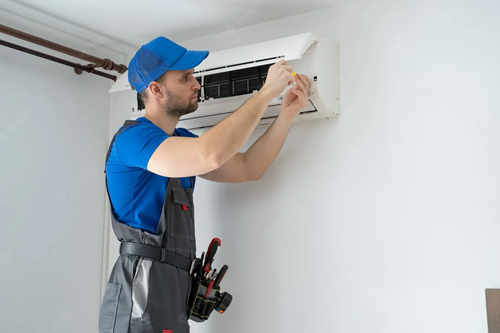
“ What size air conditioner do I need?» is a common question, especially during the hot summer months. The size of an air conditioner is determined by its cooling capacity, measured in BTUs (British Thermal Units), which tells you how much heat the unit can remove from the air in one hour.
When selecting the proper size, several factors come into play, including the room’s square footage, ceiling height, insulation quality, and the climate. Using the wrong unit of measurement can lead to inefficiency, higher energy bills, or poor cooling performance. In this guide, we’ll walk you through determining the ideal AC size for your home, along with key considerations to help you make an informed decision.
What size air conditioner do I need?
The size of the air conditioner you need depends on the room’s square footage, insulation, ceiling height, and sun exposure. Generally, for every 100-150 square feet, you need around 5,000-6,000 BTUs. Larger rooms or homes in warmer climates require higher BTU ratings to cool effectively. A typical 1.5-ton unit (18,000 BTUs) works well for 600-1,000 square feet.
How to Calculate the Right Size Air Conditioner for Your Space?
Choosing the right size air conditioner is based on several key factors, but the most important is square footage. Here’s a step-by-step guide:
- Measure the Room: Start by measuring the length and width of the room in feet. Multiply these numbers to find the square footage. For example, a room that is 12 feet wide and 15 feet long would equal 180 square feet.
- Calculate the BTUs Needed: The standard recommendation is 20 BTUs per square foot. Multiply your room’s square footage by 25 to account for weather fluctuations. For example, 180 square feet multiplied by 25 BTUs gives you 4,500 BTUs of cooling capacity.
- Consider Additional Factors: Adjust for factors such as ceiling height (higher ceilings require more cooling power), the number of windows (more windows require more BTUs), and the room’s sun exposure.
If you’re trying to organize your AC service or plan maintenance schedules, using an Online Text Editor can help you create notes and reminders that are easy to manage and customize.
What Are the Different Air Conditioner Sizes Available?
Air conditioners come in a range of sizes to accommodate different room sizes and cooling requirements. Here’s a quick breakdown:
BTU and AC Size Guide
- 600 to 1,000 square feet: 1.5-ton unit (18,000 BTUs)
- 1,000 to 1,500 square feet: 2-ton unit (24,000 BTUs)
- 1,500 to 2,000 square feet: 2.5-ton unit (30,000 BTUs)
- 2,000 to 2,500 square feet: 3-ton unit (34,000 BTUs)
- 2,500 to 3,300 square feet: 3.5-ton unit (42,000 BTUs)
The BTU determines the cooling capacity, so larger rooms or spaces that experience high temperatures require more BTUs. For example, a 3-ton unit is ideal for cooling 2,000-2,500 square feet effectively.
What Factors Affect the Size of the Air Conditioner You Need?
When calculating what size air conditioner do I need, several environmental and structural factors affect the cooling capacity required:
- Ceiling Height: If you have higher ceilings (over 9 feet), you may need a higher BTU rating to cool the space properly.
- Climate and Location: If you live in a warmer climate, you’ll need an air conditioner with more cooling power, as the AC will need to work harder.
- Insulation: Well-insulated rooms retain cool air better, reducing the size of the air conditioner needed.
- Windows and Sun Exposure: Rooms with large windows or facing direct sunlight often require larger AC units, as they gain more heat.
If you’re multitasking and looking for a fun way to enhance your typing speed while checking out air conditioning options, try a words per minute test to see how fast you can type while you browse through your AC options and notes!
How Does a Smaller vs. Larger AC Unit Impact Efficiency?
Choosing an air conditioner that is too small or too large for your space can lead to inefficiency:
- Smaller AC Units: If the unit is too small, it will have to run constantly to cool the room, leading to high energy consumption and less efficient cooling.
- Larger AC Units: While a larger AC unit might seem like a good idea, it will cool the space too quickly, then shut off, only to start again. This constant on/off cycle can increase wear and tear on the system and lead to wasted energy.
The key is to choose a unit that is appropriately sized for your room and climate, helping you maintain an ideal temperature without wasting energy.
How to Choose the Best Air Conditioner Type for Your Home?
In addition to choosing the right size, selecting the correct type of air conditioner is essential for cooling your home efficiently:
- Window Units: Great for single rooms, window air conditioners are affordable and efficient. They range from 5,000 to 12,000 BTUs, making them ideal for smaller rooms or apartments.
- Portable AC Units: These are convenient for people who need a mobile solution. However, portable units are less efficient than window or central units and may not cool large spaces effectively.
- Mini-Split Systems: These offer a great alternative to central air conditioning, allowing you to target specific rooms. Mini-split systems are often more energy-efficient, but installation costs can be higher than those of other types.
- Central Air Conditioning: Best for cooling the entire home, central air units require a proper duct system but offer the most consistent and powerful cooling.
Conclusion
In conclusion, the size of the air conditioner you need depends on several factors, including room size, insulation, and climate. To ensure maximum efficiency and comfort, it’s essential to calculate the correct BTUs needed for your space and consider additional factors such as ceiling height and sun exposure. Choosing the right size will prevent your air conditioner from running inefficiently, saving you money on energy bills and extending the unit’s life.
FAQ’s
How do I calculate the size of the air conditioner I need?
To calculate the right size, measure the room’s square footage, then multiply it by 20 BTUs per square foot to get the minimum cooling capacity. Adjust for other factors, such as ceiling height and insulation.
How many square feet does a 3-ton AC unit cover?
A 3-ton air conditioner is ideal for cooling 2,000 to 2,500 square feet.
What is the most energy-efficient air conditioner size?
The most energy-efficient size is one that matches your room’s BTU requirements. Over- or undersizing will decrease efficiency and increase energy costs.
What are the signs that I need a bigger air conditioner?
If your AC struggles to cool the space, runs constantly, or leaves the room warm, it may be too small for the space. Conversely, if it cools too quickly and doesn’t remove humidity, it may be too large.
Can I install a larger AC unit if I have a larger room?
Yes, but ensure it is the correct size based on BTUs for your room’s square footage. An oversized unit can lead to inefficient cooling and higher energy costs.